Wednesday, April 25, 2012

LABOUR MINISTER TURNS GOALKEEPER


LABOUR MINISTER TURNS GOALKEEPER,

WINS MATCH AND HEARTS OF QUEPEMKARS


By: Walter Menezes

With pictures by Agush Gonsalves


Some exclusive pictures of Goa’s Labour Minister in action,
   bringing back memories of the great goalkeeper that he had been, once upon a time!


Two weeks after being inducted in the Cabinet, Avertano Furtado, the unassuming Minister for Labour and Fisheries, showed up at the football ground of Quepem Sports Complex and played for Tilamol-Quepem Veterans in the inaugural charity match of ‘The Clash of the Veterans’ against Chinchinim Veterans on Sunday, 22 April 2012.

Rising to the occasion, the Labour Minister proved his mettle as an exceptional goalkeeper pulling off two great saves for Tilamol-Quepem Veterans and helping the team win the match by 4-3 goals. In the process, Avertano Furtado instantly won the hearts of Quepemkars as he rubbed shoulders with the players and mingled with the spectators! The winning team was leading 2-1 at half-time. Egidio D’Costa, Joaquim Dias, Rosario Fernandes and Jose Rbello scored for Tilamol-Quepem Veterans while Elvis Goes, Mario Soares and Piety Leitao netted the goals for Chinchinim Veterans.

‘The Clash of the Veterans’ football charity matches have been organized by Tilamol-based Khell Kala Mogi (KKM) to raise funds to support the family of one of their active members, late Rocy Fernandes who died two months ago in a tragic road accident while on his way to Sarzora. Late Rocy was also a football player.

Peter Fernandes, President of KKM welcomed the guests and players while Rf Urbano Fernandes, the Parish Priest of Our Lady Mother of Poor Church, Tilamol recited a short prayer before the commencement of the match. Labour Minister Avertano Furtado also spoke on the occasion and later donated Rs.10,000/- as his contribution towards the fund. KKM has so far collected more than fifty thousand from well-wishers whose names were announced during the match.

Next charity match will be played on Sunday, 29 April 2012, between Bardez Veterans and Salgaonkar Veterans.


The Minister shakes hands with players of Chinchinim Veterans.
Praying…Labour Minister with players of Tilamol-Quepem Veterans.

Ivan Coutinho, captain of Tilamol-Quepem Veterans welcomes the Minister with a bouquet.

 Feels good to be with the players again!

With Khell Kala Mogi President Peter Fernandes and Parish Priest Fr Urbano Fernandes before the start of play
Feels good to be with the players again!

No! I won’t let that one pass through my hands…a study in concentration.
The Minister is having a ‘ball of a time’!

[Photos and reports, as forwarded to www.goa-world.com  gaspar almeida.]

An edited version of this photo-feature appeared on Gomantak Times dated 25 April 2012.

Sunday, August 7, 2011

Thursday, August 4, 2011

AWARDS AND APPRECIATION…FRUITS OF HARD WORK AND DEDICATION !

AWARDS AND APPRECIATION…

FRUITS OF HARD WORK AND DEDICATION!


                                                   By: Walter Menezes


His slogan, Swaraj is my birthright and I shall have it, fired the hearts and minds of a nation thirsting for freedom.
Lokmanya Tilak, India’s tall leader was remembered at a solemn and impressive function organized by Sanguem Quepem Patrakar Sangh (SQPS) on August 1, 2011 at Sarvadoya High School Hall, Curchorem. SQPS was established in 1983 and the function coincided with the 28th Anniversary Celebrations of the sangh.


As in the past, this year too, SQPS honoured two distinguished Government servants and a journalist and felicitated meritorious students from Curchorem who excelled in the SSC and HSSC Examinations.


Agnelo A Fernandes, Deputy Collector and Sub-Divisional Magistrate of Quepem Sub-Division was honoured with the Late Pundalik Tukoba Naik Memorial Award while Kalpana A Nayak Karmali, X-Ray Technician of Curchorem Health Centre received the Late Suvarna Suhas Sanvordekar Memorial Award. Both these awards are given every year to two best government servants from Sanguem and Quepem talukas. Marathi writer and columnist Vijay Narayan Kapdi was the recipient of the ‘Patrakar Mitr Award’ instituted in memory of Late Gajanan Shenvi Borkar.


Sarvanand Sawant Dessai and Vithal Audienkar, Educational Programme In-Charge and Advisory Board Member respectively of SQPS were also honored on the occasion.
Shyam Satardekar, Curchorem MLA and Chairman, Goa Tourism Development Corporation was the Chief Guest while Alifa Fernandes, Chairperson, Curchorem-Kakoda Municipal Council was the Guest of Honour. Eminent writer and journalist, Vishnu Surya Wagh was the Keynote Speaker. SQPS’s Founder President Chandrakant Parsekar presided.


In his address, Vishnu Wagh spoke about the disturbing trends that one noticed in today’s era of journalism and went on to add that many times, more than the Chief Editor, it was the Advertisement Manager who called the shots, even going to the extent of influencing the outcome of the newspaper pages.

Vartahar, a special issue published by SQPS was also released.


Meritorious students who were felicitated included Priya Singh, Prachi Jaiprakash Mahale, Esha Eknath Sinai Bhangui, Deepika Subhash Naik, Tejal Kamlaksh Gaonkar, Smita Gawas Dessai, Cynia Nilesh Chari, Saish N Raut Dessai, Elaine Valansa Fizardo, Akhil Jaiwant Sinai Bhangui (all students of SSC) and Siddhi Ashok Gaunekar, Shravani Devidas Gurav, Shingadi Dixita Bhairu and Kapil U Naik (all students of XII).

Earlier in the day, All Goa Devotional Singing Competition was also organized by SQPS which received enthusiastic response from participants.


_________________________________
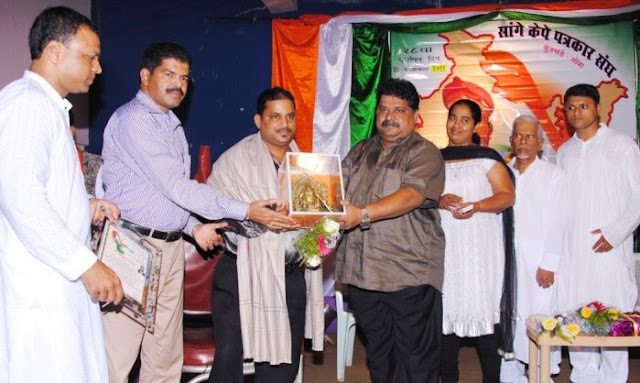
Pic DSC_0689: Best Govt. Servant Award: Agnelo A Fernandes receiving the Late Pundalik Tukoba Naik Memorial Award from Vishnu Surya Wagh. Shyam Satardekar, Curchorem MLA, Alifa Fernandes, Chairperson, Curchorem-Kakoda Municipal Council and SQPS President Prahar Sanvordekar and Founder President Chandrakant Parsekar are also seen.

Pic DSC_0697: Kalpana A Nayak Karmali with the Late Suvarna Suhas Sanvordekar Memorial Award.

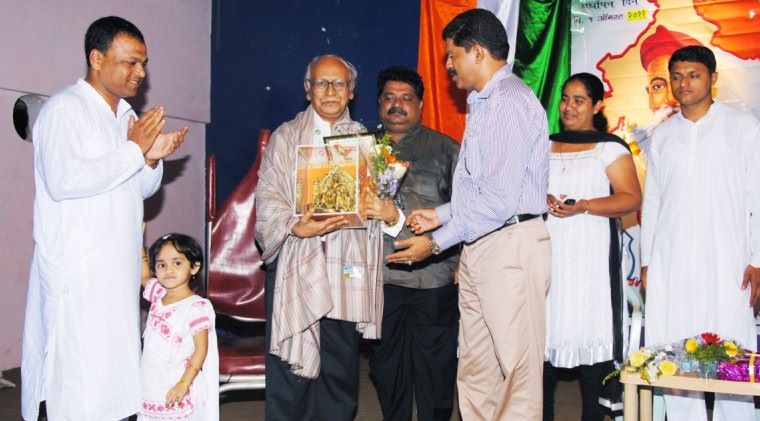
Pic DSC_0706: Vijay Narayan Kapdi smiles after receiving the Patrakar Mitr Award.

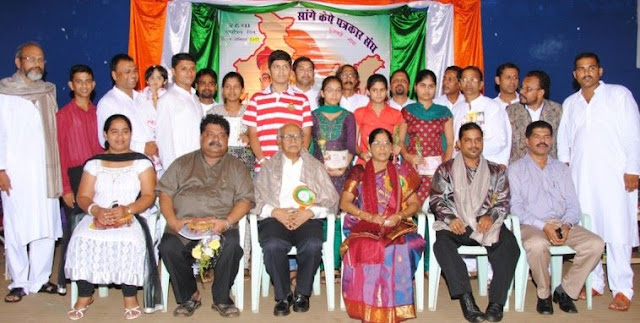
Pic 4: Award winners, meritorious students and participants of Singing Competition with guests and SQPS members.


Thursday, February 10, 2011

Tuesday, February 1, 2011

 
Posted by Picasa

Konkani book "TURO" - A review by: Walter Menezes


VINCY QUADROS' KONKANI AWARD WINNING BOOK OF SHORT STORIES "TURO"
STORIES OF LOVE AND LUST, FAITH AND FORTITUDE


 A review of the book by: Walter Menezes

(first appeared on Gomantak Times dated 25.01.2011)

An unusual cover design: a combination of flowers, the main altar of a church in all its glitter and the writer himself, greeted me when I picked up a copy of Turo, Vincy Quadros’ award-winning book of Konknni short stories in Roman script and I wondered why. Two pages into the book, I found it was Vincy’s way of dedicating his collection to Neves Saibinn (Our Lady of Snows), the patroness of Raia parish. “…zaitea kalla thavn mhoji itsa asli mhojem ek tori pustok Neves Saibinnik ompunk. Aiz hi mhoji itsa purnn zata mhunn Neves Saibinnik hanv din’vastam ani noman kortam. (I have been nursing a wish for a long time to dedicate one of my books to Our Lady of Snows. I thank and praise Neves Saibinn for having fulfilled this wish.),” he says in his introduction, Kothancho Turo Bandtana… Incidentally, the book was released on 5th August, 2010, the day of the feast of Our Lady of Snows.

Like the finely crafted main altar on the cover, the hundred plus pages that make this book gives us a glimpse of Vincy’s craftsmanship as a storyteller, encompassing a variety of subjects ranging from love and lust to matters of faith and fortitude. “Protek kothent ek nirop asa, dekh asa ani jivitachi somzonni asa…(There is a message and a moral, and the meaning of life in every story…),” is how Fr. Cipriano da Silva has summed up the ten stories in Turo.

The first, Olem Mon, is a touching story of Salvador who returns home after 5 long years in Kuwait and goes to visit Sabina, the girl who holds a special place in his heart, that same evening with a bag full of imported perfumes and soap. But is Sabina waiting? Towards the end of the story and using minimum space, Vincy not only creates a tragic twist in the tale but a remarkable story as well. Mukti, on the other hand, focuses on a young and educated Sunita’s journey into the rough and tumble of politics and her determined fight to free her village from the clutches of soreachim dukanam (liquor shops) and tavernas. Moved at the sight of male members addicted to liquor and families in ruins, she makes ‘hea ganvant bhouxik lugarancher soro bond (ban sale of liquor at public places in this vaillage)’ her one and only slogan during the panchayat elections and she not only wins but goes on to become the Sarpanch as well!

In Svatontreo, Vincy uses Meena to give a new lease of life to her mother while elsewhere his heart bleeds at the sight of atrocities and injustices heaped upon women. Ruchika is not only a stark reminder of the ‘games’ powerful people play but a reconstruction of sorts of the infamous Ruchika/Rathore saga that hogged the limelight not so long ago.

In Ostori Dis, when Sumitra conceives for the third time and goes to her mother-in-law to inform her of the doctor’s advice and the risks involved if she continues with her pregnancy, her sasumai rubbishes her saying, “Amger zaunk nant go bhurgim? (You think we have not borne children?)” Clearly, Vincy is a man with his ear to the ground and uses such crisp dialogues, like tea-bags, to flavor his collection.

At times, however, one does notice this need not only to fine-tune the stories (Zatra, Devacho Gutt) but add a dash of colour too. In Kurpa, where the story unfolds on 5th August, the day the Raia parish celebrates the feast of Neves Saibinn, Vincy only makes a passing reference to the cutting-of-the-corn ceremony (hech disak Gõyant poilem konnos katortat) with which the feast is associated. Also known all over as Konnsachem Fest (Harvest Feast), Vincy could have done well to include a para or two detailing the pomp and pageantry as the first corn is cut by the priest, heralding the beginning of the harvest season. And in Devacho Gutt, the word horaunk (to plead) seems a little out of place, especially from a Catholic’s point of view. [“Devak horaunk hache poros dusro lugar khoim asa Padr Vigar? (Father, can anyone find a better place than this to plead before God?),” Maria asks the parish priest when questioned about her presence inside the church.]

Published under the Pikavoll scheme of Dalgado Konknni Akademi, Turo could have been a shade better if Vincy had done another round of spell-check to weed out some unnecessary mistakes.

While complimenting Vincy on being awarded the Konknni Martir Floriano Vaz Puroskar instituted by Thomas Stephen’s Konknni Kendr, Porvorim for Turo, here’s wishing him Neves Saibinnichi kurpa to scale greater heights in the years to come!

Walter Menezes


About the book:
TURO (a collection of short stories) by Vincy Quadros
Published by Filomena Quadros for Snows Prakashan, Arlem, Raia
Pages: 114, Price: Rs.60/-

[ The author can be contacted via email: vincyquadros at gmail.com
Vincy Quadros is the recipient of the 2010 Konknni Martir Floriano Vaz Puroskar, the literary award instituted by Thomas Stephens Konknni Kendr, Porvorim for his collection of short stories, Turo.
The award was conferred on him on Republic Day, 26th January, 2011. Vincy Quadros is also the Vice President [Op-odheokx] of the Goa Konknni Akademi and his postal address is:
"Snows Krupa", Arlem, Raia, Salcete Goa and can be contacted on his Mobile - 9822587498.
Visit me at http://vincyquadros.blogspot.com/ ].

Related pictures:
1. Vincy receiving the Konknni Martir Florian Vaz Puroskar from Chief Guest, Shri Cyriaco Dias. Dr. (Fr.) Pratap Naik, Director, TSKK is also seen.

2. Vincy with Smt. Ophelia D’Souza (recipient of Antonio Pereira Konknni Puroskar) and Jose Salvador Fernandes (recipient of Dr. Jack Sequeira Puroskar). Fr. Pratap Naik, Shri Cyriaco Dias and Trupti Naik are also seen.

Tuesday, September 21, 2010

A CHRONICLE OF KONKNNI CINEMA

FROM MOGACHO ANVDDO TO MOGACHI ZHOR…
A CHRONICLE OF KONKNNI CINEMA

By Walter Menezes

After Vozram, a treasure trove of Konknni adages with English interpretations,
Isidore Dantas’ second book on Konknni Cinema will be launched in Goa today.

Ten years ago, an article on Konknni Cinema appearing in a newspaper caught Isidore Dantas’ attention. Not satisfied with what he read, the Pune-based Goan writer was soon on his feet, determined to dig deeper and set the record straight. Ten long years later, his search was complete: Konknni Cholchitram, a 276 pages rich, hard-bound chronicle of 31 Konknni celluloid films, funded by George Pinto & family and sponsored by other Goans whose names are duly acknowledged, was released during the 10th Anniversary Celebrations of Goa Sudharop on April 4, 2010 in California, USA.

The first Konknni film, "Mogacho Anvddo" was screened on April 24, 1950. Collecting information spanning a period of 60 years may look easy to the eye but the task was daunting. Oso sod ghetana sabar oddchonneo dolleam mukhar aileo (I encountered many obstacles in the process), Dantas discloses in his preface, Mhojem Utor. From Doordarshan in Mumbai to National Film Archives of India in Pune to many producers, his journey ended in dead-ends. Even records of old songs were difficult to find at the Akashvani offices in Mumbai and Panaji.

Inspite of all these odds, Konknni Cholchitram stands out and not only provides various information on the films listed in the book in easy and lucid Konknni but includes 269 photographs, some rare, and lyrics of 109 songs with as many as 85 of them complete with kantaranchi surlipi (music notes).

Konknni Cholchitram sets off in earnest with Mogacho Anvddo, the first film ever to be made in Konknni. Produced and directed by Al Jerry Braganza (Antonio Lawrence Jerry Braganza), Mogacho Anvddo was based on Dioguinho De Melo’s novel, Mogachi Odd with Al Jerry himself playing the lead role opposite Leena Fernandes, then working as a telephone operator / receptionist in United Artists, an American company in Mumbai. Presented by ETICA (Exchange Talkies of India, China and Africa), the film was simultaneously released on April 24, 1950 at Mapusa’s Dashrat Cinema, Matunga’s Rivoli and Star in Mazagaon.

April 24 is celebrated as Konknni Cinema Day every year but the Day and the Father of Konknni Cinema, Al Jerry Braganza are, on many an occasion, sidelined and forgotten. A week after the curtains came down on the 4th Konknni Film Festival in May 2008, Tomazinho Cardozo writing in Vavraddeancho Ixtt (June 7, 2008) made a candid observation, “... puroskar vanttni hea dobajea vellar nodrek ailoleo kaim chuki. Survatekuch kariavollicho sutrdar vo ‘compere’ hannem thoddkean cholchitracho itihas sanglo. Bharotantlo vhoddantlo vhodd cholchitrkar sorgest Dada Saheb Phalke hanchem porian nanv ghetlem. Punn Konknni filmanchea itihasachi matui khobor kelina. Konknni cinemachea itihasachi taka mahiti asa vo na hoch mhaka dubhav poddlo (…and some mistakes which were noticed during the presentation ceremony. The compere, at the start of the function, gave a brief history of cinema. Even late Dada Saheb Phalke, one of India’s tallest film personalities, was acknowledged. But no mention was made of the history of Konknni cinema. Was he even aware of the history of Konknni cinema? I had my doubt).

It would take another 13 years before Frank Fernand produced the next Konknni film, Amchem Noxib in 1963 and followed it up two years later with Nirmonn. So successful was Nirmonn (awarded Certificate of Merit by Central Govt.) that a Hindi edition, Taqdeer soon rolled out with Shalini Mardolkar playing the lead role in both the films. It is said that this movie was dubbed in seven other languages: Telugu, Kannada, Tamil, Malyalam, Bengali, Assamese and Oriya. (Source: 50 years of Konkani Cinema edited by Andrew Greno Viegas, Vol I, Issue I, 2000). Some of the songs from these two films like Mollbailo Dov, Claudia and Nhid Mhojea Bai still do the rounds at Goan get-togethers and wedding receptions.

From 1966 onwards, there is a marked change with Konknni films making their presence felt at regular intervals not only in Mumbai and Goa but Karnataka as well. Sukhachem Sopon (1966) is followed by films like Mhoji Ghorkan’n (1969), Kortubancho Sonvsar (1970), Jivit Amchem Oxem (1972), Tisri Chitt (1973) and two films in 1977:Boglantt and Mog Ani Moipas (remember Konknni Kogull Wilfy Rebimbus’ unforgettable song, Mog Tuzo Kitlo Axelom sung by P B Srinivas?)

For lack of space and no other reason, I will randomly sift through the remainder of 21 films which makes Konknni Cholchitram at once out of the ordinary. From K G Nayak’s Toposvani and Dr K Ramesh Kamath’s Jana Mana to Prince Jacob Productions’ Padri and Rajendra Talak Creations’ Aleesha, Ontornad and Sawariya.com, Dantas takes the reader through the finer details of the films, including its cast and cost and lyrics and locales. There are others, too. Like Dnyaneshwar Moghe’s O Bai, Sanjeev Prabhudesai’s Sudd, Tiburcio Fernandes’ (T-Bush) Black Nhesop Fashion Atanchem, Fatorda MLA Damodar Naik’s Zagor and of course, Laxmikant Shetgaonkar’s much acclaimed film, Poltoddcho Monis.

Not many will know that the hymn, Sogott Sangata Melliam sung during the house-to-house visit of Mother Mary’s statue is actually a creation of Wilfy Rebimbus and finds place in Dr. Richard Castellino’s Bhogsonnem. Similarly, the story of Muthu Krishan Das’ film, Girestkai (1983) drew its inspiration from Lambert Mascarenhas’ Sorrowing Lies My Land. “Tantunt tontrik dox aslolean, tem borem cholunk pavunk na. Tem porot dub kelear taka boro protisad mellunk xokta (There were technical faults, reason why the film did not fare well. If it is dubbed again, it can get a good response),” observes Isidore. Is anybody listening?

Finally, it is ‘The End’ of Konknni Cholchitram with Sucorina D’Costa’s Dumiana Niagara Motion Films and Bonifacio Dias’ BV Films joint venture, Mogachi Zhor screened in Goa and Niagara in the last week of December 2009.

With a list of personalities from the Konknni community who have enriched Indian cinema in various spheres and a glossary of difficult words explained, Isidore Dantas’ chronicle is a glowing tribute to the fraternity of Konknni Cholchitram.


[This article first appeared on Gomantak Times dated 21.09.2010 - the day 'Konkani Cholchitram' was officially released in Goa under the auspices of Goa Sudharop - USA, www.goasudharop.org]